
New to peptides
New to peptides?
Start here.
Your first research order, compounds to explore, preparing a laboratory vial, reading the units and storing the material. The essentials, together in one practical guide.
About 8 minutes · For laboratory research
Start with your first order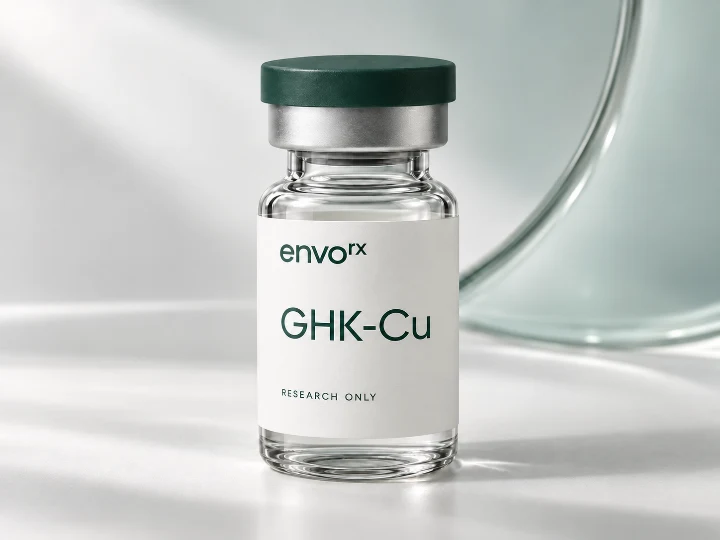
Start with the exact material. Keep the label and lot information together.
01 · Your first order
Before your first vial, gather these four essentials.
Choose the exact research material, then check the supplies for preparing and handling it. Here is what each item does, and what to look for before you begin.
-
our peptide. Select the exact compound and listed amount for your planned laboratory work. Check the name, format and batch information together. Milligrams on the vial identify its contents; they do not prescribe a dose.
-
AC Water. Have the specified diluent ready before opening a dry vial. Our listed BAC Water comes in a 10 mL vial. Confirm it is compatible with the material, then follow your laboratory method for the preparation volume.
-
nsulin syringes. The listed pack contains 10 single-use U-100 syringes with a 1 mL capacity and 31G format. On that scale, 100 units represent 1 mL. Use a fresh device for each appropriate laboratory transfer and follow the sharps-disposal procedure.
-
lcohol prep pads. Keep individually wrapped 70% isopropyl alcohol pads ready for compatible vial closures and surfaces. Follow the label and laboratory cleaning procedure, allow the surface to dry as directed and discard each pad after one use.
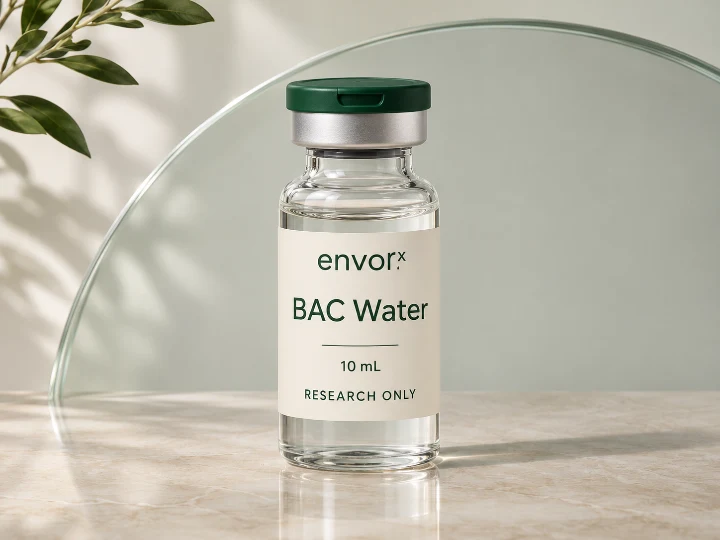
Lab supplies
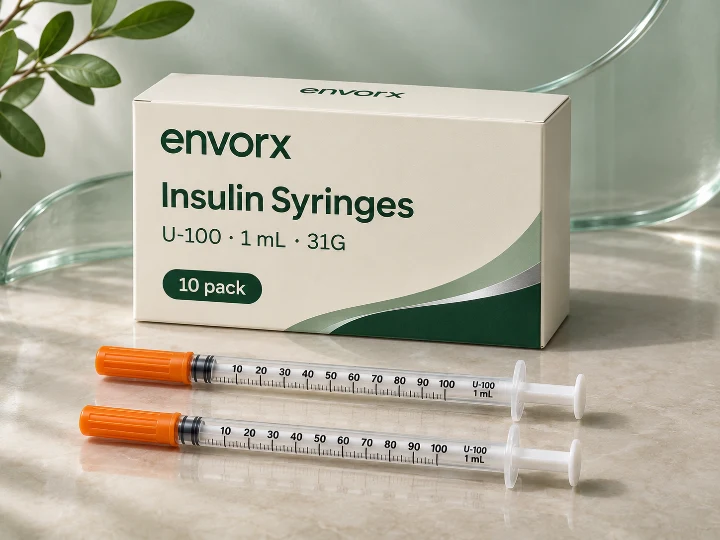
Lab supplies
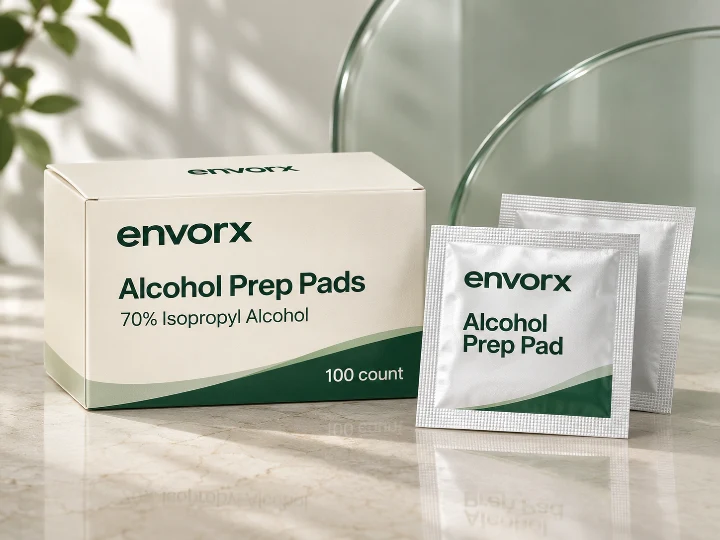
Lab supplies
Supplies are sold separately. Match the actual labels, solvent and measuring equipment to your laboratory’s validated method before preparing a sample.
Keep the label and batch information together.
Match the exact material and lot to its documentation. Check what the report measures, the test method and date. A purity percentage does not establish every other property of the material.
Read a COA Understand product types02 · Starter compounds
Get to know the Envorx catalog.
These are places to begin reading, not a recommended regimen. Compare the exact material, vial amount and documentation against your laboratory’s question. A familiar name does not establish suitability for personal use.
Current one-time prices in USD, per vial. Review each product’s available formats and purchase options.
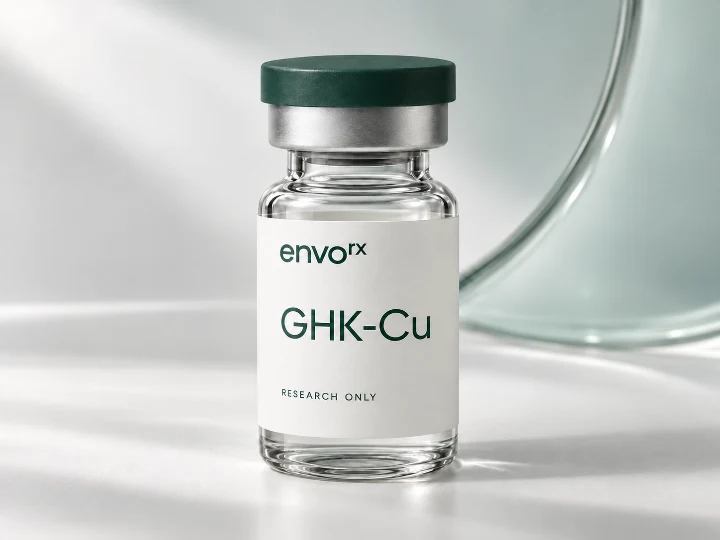
Peptides
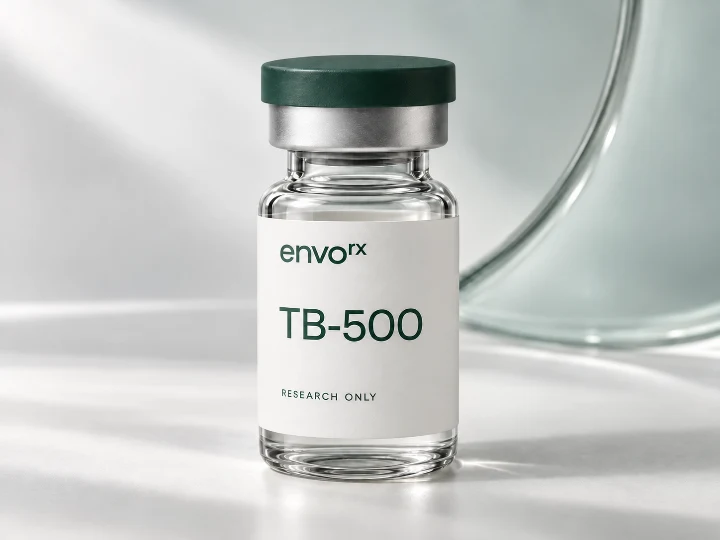
Peptides
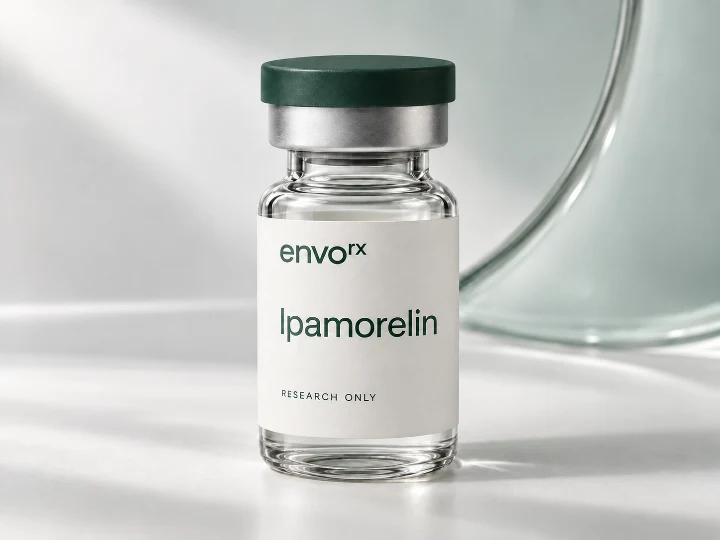
Hormone Signaling
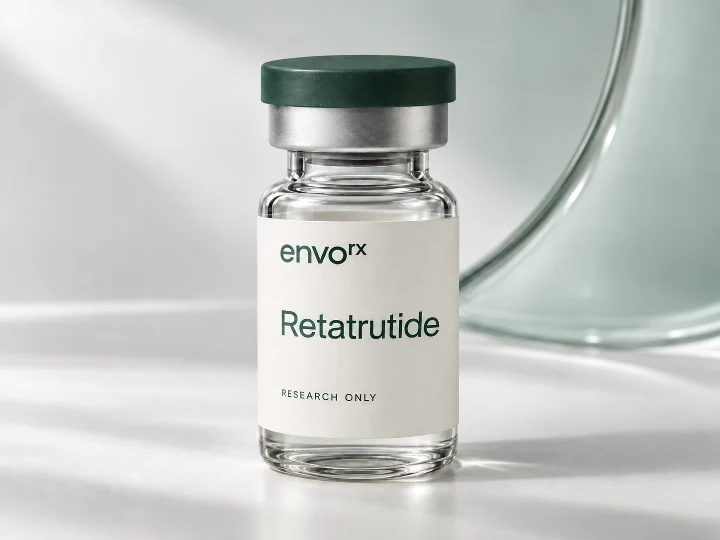
Peptides
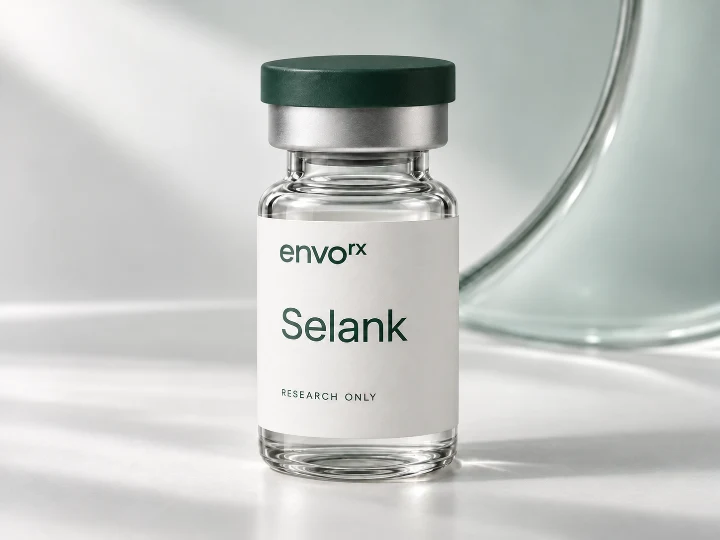
Focus & Calm
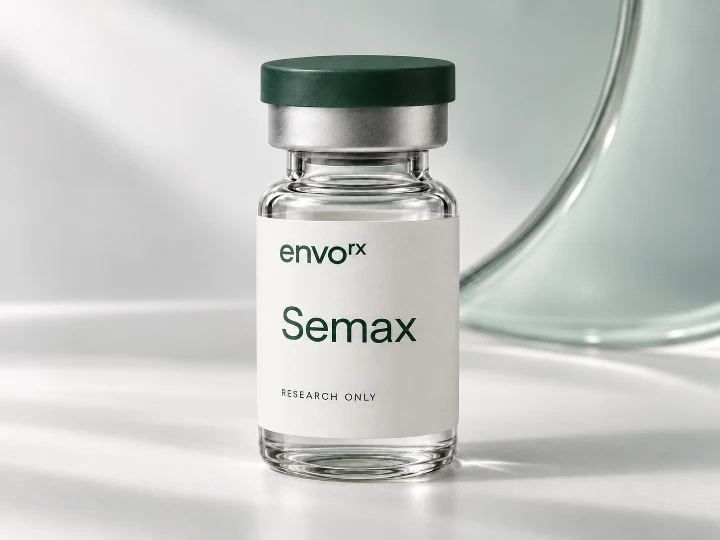
Focus & Calm
Not sure where to start reading?
Explore the catalog by research topic, then read the individual product’s description and sources.
Explore goals03 · Mixing a vial
Preparing a laboratory sample, in eight steps.
Reconstitution brings a dried material into solution. There is no universal recipe for every peptide. Use these steps to organise the work around the exact material’s instructions and your laboratory’s validated preparation method.
- Read the material’s instructions.
Obtain the preparation information and safety data. Confirm the compatible solvent, intended final concentration and your laboratory’s approved method.
- Bring the closed vial to the specified working conditions.
For a cold, dried peptide, manufacturer guidance may call for warming the sealed container before opening to limit moisture uptake. Use its instructions rather than a universal waiting time.
- Prepare the workspace and equipment.
Follow the laboratory’s cleaning and protective-equipment procedure. Identify the material, lot and solvent before opening anything.
- Check the calculation and measure the solvent.
Determine the final solution volume required by the method. Use suitable calibrated equipment and independently check the units and labels.
- Add the specified solvent carefully.
Follow the validated transfer procedure and the material’s instructions. Different peptide sequences can require different solvents and preparation conditions.
- Mix by the specified method.
Use the mixing conditions in the protocol. Avoid assuming that one mixing time or technique works for every peptide; clarify incomplete dissolution before proceeding.
- Inspect and document the preparation.
Record its appearance and any particles, precipitation or unexpected change. Appearance alone cannot verify identity, purity, stability or sterility.
- Label, divide and store as directed.
Record identity, lot, solvent, final concentration, preparation date and the validated usable period. Divide into smaller portions if the method requires it and follow the specified storage conditions.
The concentration calculation
Concentration (mg/mL) = material mass (mg) ÷ final solution volume (mL).
10 mg ÷ 2 mL = 5 mg/mL
Here, 2 mL is the final solution volume, which is not necessarily identical to the volume of solvent added. These are hypothetical laboratory values, not a mixing recipe or a recommended dose.
Open the concentration calculator04 · Syringe unitsl
Read the scale. Keep the units separate.
On a U-100 scale, 100 units represent 1 mL: a reading of 10 represents 0.1 mL, and 50 represents 0.5 mL. That describes volume, not the mass of a peptide. Other scales can be different; check the device’s actual labelling.
The examples below convert measured volume into the amount of material in a hypothetical laboratory solution. They do not select a dose or provide instructions for administration.
| U-100 marking | Volume (mL) | Mass at 2 mg/mL | Mass at 5 mg/mL |
|---|---|---|---|
| 5 | 0.05 mL | 0.1 mg | 0.25 mg |
| 10 | 0.1 mL | 0.2 mg | 0.5 mg |
| 25 | 0.25 mL | 0.5 mg | 1.25 mg |
| 50 | 0.5 mL | 1 mg | 2.5 mg |
| 100 | 1 mL | 2 mg | 5 mg |
mg, mcg and IU are not the same thing.
1 mg = 1,000 mcg. A mass value converts to a volume only when the concentration is known. Biological activity units (IU), including an HCG label’s IU, cannot be converted to mg or syringe markings using this table.
05 · Storage and handling
Keep the conditions with the vial.
Storage is material-specific. Get the documented requirements before delivery, and keep the dry material’s instructions separate from those for a prepared solution. There is no universal temperature or shelf life for every catalog compound.
The examples below convert measured volume into the amount of material in a hypothetical laboratory solution. They do not select a dose or provide instructions for administration.
- Unmixed powder
Use the exact material’s specified storage temperature, usable period and light or moisture protection. Keep the container properly sealed. Plan how to handle a cold vial before opening it so condensation does not compromise the sample.
- Prepared solution
Record the solvent, concentration, date and validated usable period. Store under the method’s specified conditions. Dividing the sample into smaller portions may help limit repeated freeze–thaw cycles; whether a solution should be frozen depends on the material and method.
- Unexpected changes
Quarantine material with unexpected particles, precipitation, colour changes, damaged packaging or a storage excursion until it has been assessed. A clear solution is not proof that it is pure, sterile or still within specification.
A label worth keeping.
Material name · lot · solvent · final concentration · preparation date · storage conditions · usable-until date established by the validated method. Record any deviation and its assessment with the sample.
06 · FAQ
Questions every beginner asks.
Envorx lists laboratory research materials for adults aged 21 and over, not medicines for personal use. A catalog purchase does not authorise human or animal administration. Check the product’s intended use and applicable requirements for your research; questions about treatment belong with a licensed clinician.
A percentage only has meaning alongside the test method, sample and lot. An HPLC purity result does not by itself establish the amount of active material, identity, sterility or endotoxin level. Check the actual batch report; this guide does not claim a purity result for every Envorx lot.
Use the solvent or buffer specified for the material and laboratory method. Peptide solubility varies, and a preservative may be incompatible with an experiment. Do not assume that adding bacteriostatic water makes a preparation sterile or gives it a universal usable period.
Establish the required final concentration and final solution volume from the material’s instructions and validated method. Then check mass divided by final volume. The 10 mg and 2 mL example below is arithmetic, not a universal preparation recipe.
There is no single usable period for all peptide solutions. It depends on the material, solvent, conditions and validated method. CDC’s 28-day guidance concerns opened multi-dose medication vials unless the manufacturer specifies otherwise; it does not establish a research peptide solution’s stability.
Millilitres measure volume. On a U-100 syringe scale, 100 scale units correspond to 1 mL, so a reading of 10 corresponds to 0.1 mL. The scale does not tell you peptide mass without a known concentration. Biological IU, such as the units on an HCG label, are not interchangeable with these syringe readings.
Ask for batch-specific documentation that matches the material and lot: identity, the purity method and result, and any content or other tests relevant to the intended research. Check dates, the testing laboratory and what was actually measured. A fixed number of tests is not proof of suitability..
For laboratory research only. Adults 21+.
Envorx materials are not for human or animal consumption. This guide explains documentation, laboratory preparation and measurement; it is not a personal-use, injection or treatment guide. Follow the supplier’s specifications and your laboratory’s validated preparation methods.